
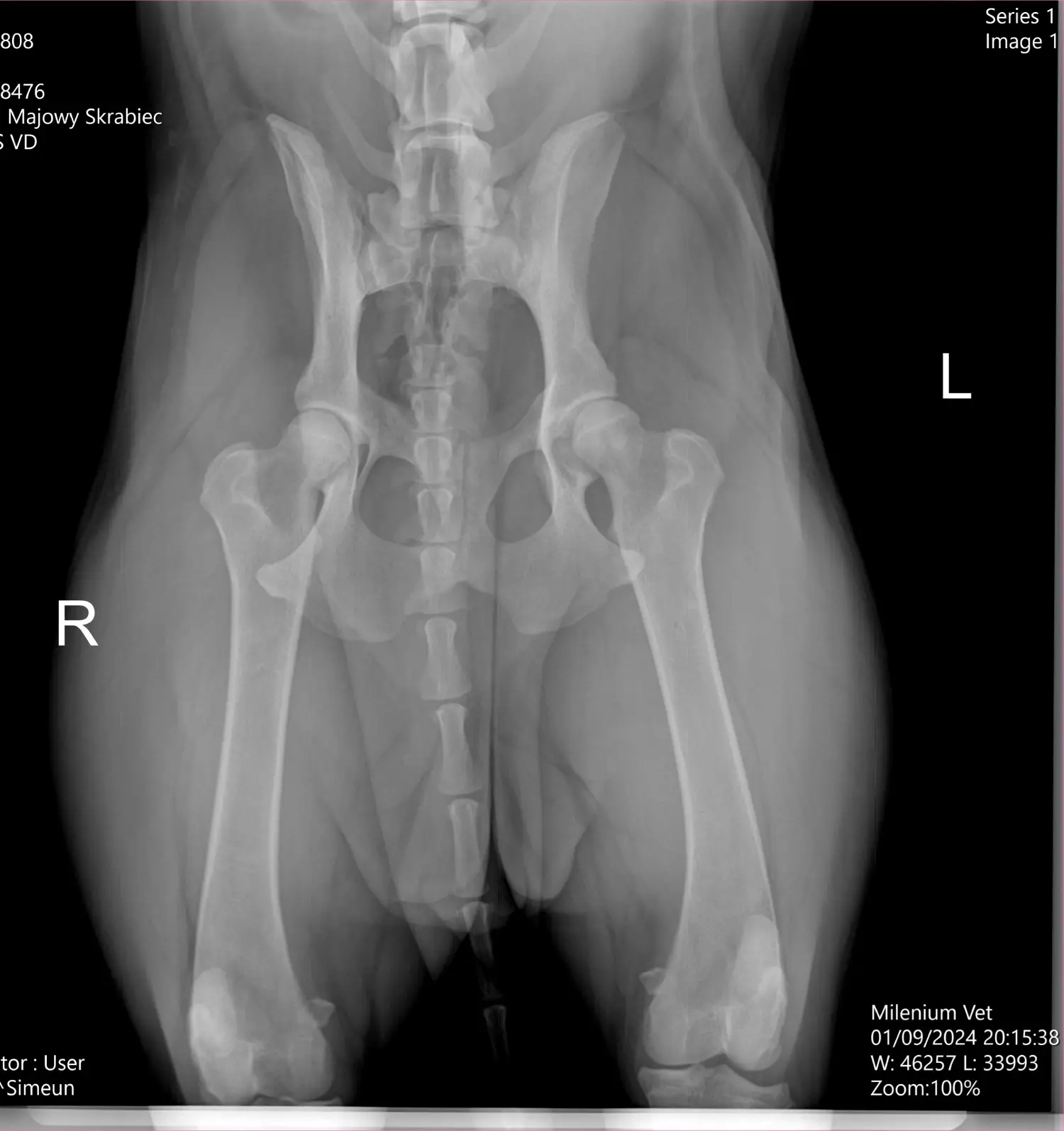
Like people, dogs can also have skeletal problems, whether early or later in life. In young dogs the problem develops during growth, as elbow and hip dysplasia, while in older dogs the problem often involves spinal ossification and varying degrees of arthritis, which are frequently a consequence of dysplasia. In small breeds we also often see patellar luxation. Otherwise, every puppy is born with healthy joints, meaning healthy hips and elbows. If there's a genetic predisposition, combined with the effect of paragenetic factors, dysplasia can appear as early as a young age. At the Milenium Vet veterinary clinic in Novi Sad, they've had cases of diagnosing dysplasia in puppies as young as 4-5 months old. Later in life, various traumatic injuries can also lead to dysplasia.
-Hip and elbow dysplasia is a genetically predisposed abnormality in the structure and development of the hips or elbows. It's most often a hereditary disease in dogs, but several other factors can also contribute to dysplasia, such as an unbalanced diet, excess weight, slippery floors... Dysplasia occurs at roughly equal rates in both purebred and mixed-breed dogs – explains Dr. med. vet. Simeun Panić, founder of the Milenium Vet clinic in Novi Sad, Subotička 55a, for our portal.
According to him, abnormal hip development most often occurs bilaterally, and such hips lead to arthritis of varying degrees as a consequence. Dogs with hip and elbow dysplasia are excluded from further breeding. He points out that at their clinic they perform imaging and grading of hips and elbows, along with issuing FCI certificates.
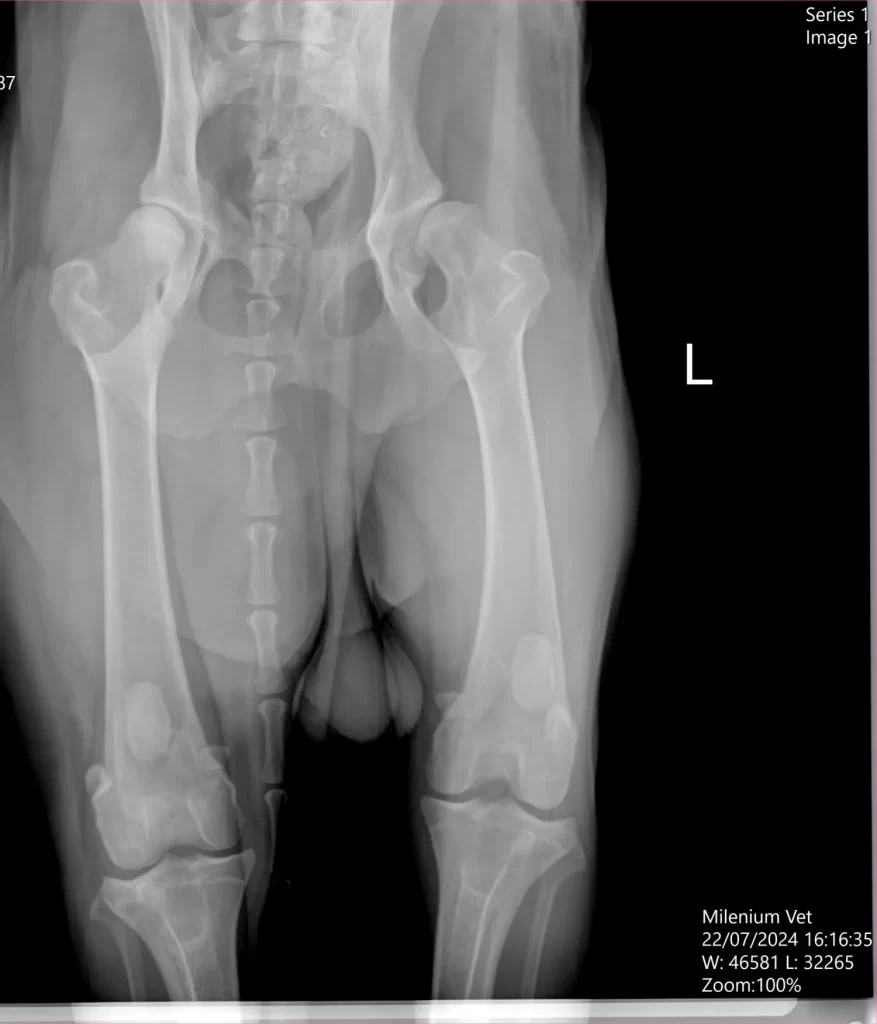
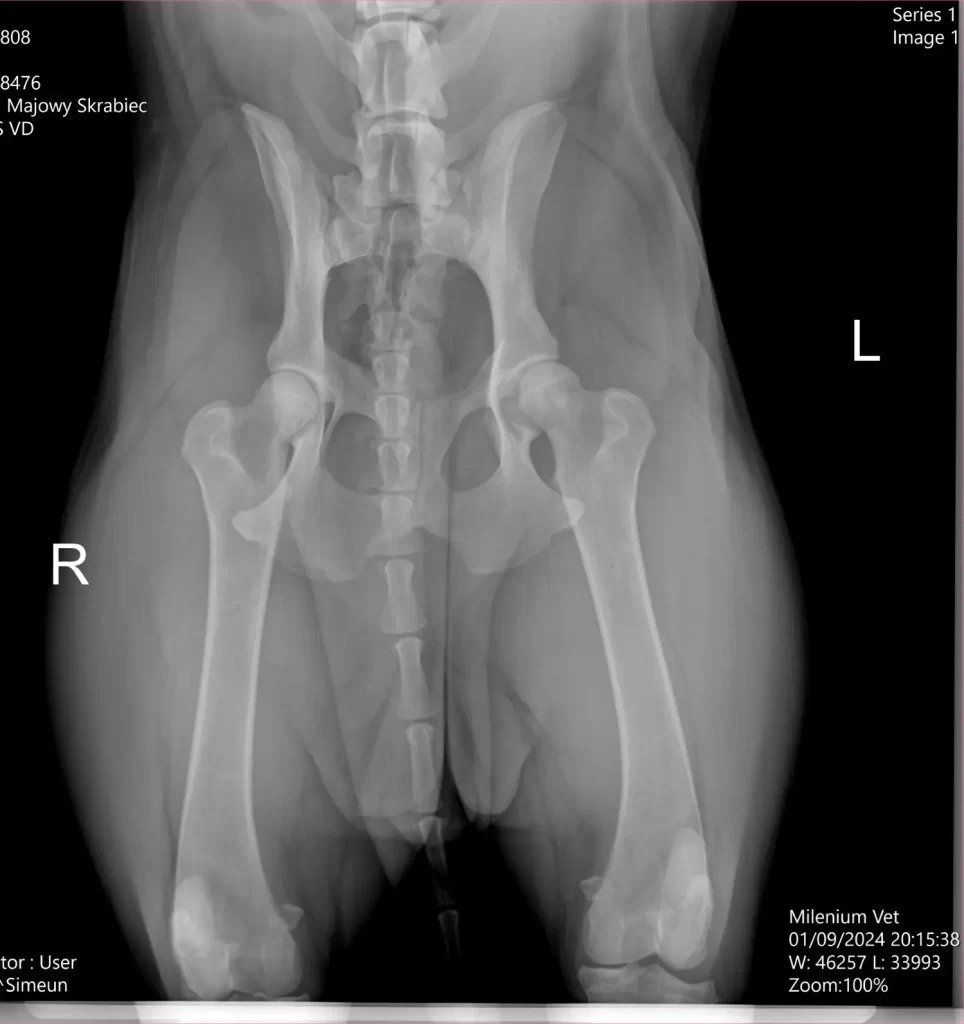
Asked how dysplasia in dogs is diagnosed, Dr. Panić emphasizes that hip and elbow dysplasia diagnostics are carried out through a clinical exam, but since it's also considered a hidden defect, an orthopedic exam and X-ray diagnostics – one of the most reliable methods for reaching a final diagnosis – are absolutely necessary to arrive at a definitive diagnosis of dysplasia. So the final diagnosis is based on the dog's clinical picture, an orthopedic exam, and radiological diagnostics. Regarding dog breeds, Dr. Panić emphasizes that dysplasia can occur in any breed, but it's most often seen in large and giant breeds such as the Great Dane, Labrador, German Shepherd, Bernese Mountain Dog, and Rottweiler. Besides genetics, factors that lead to dysplasia include excessive growth, excess weight, an unbalanced diet, and excessive exercise, all of which can heighten the genetic predisposition.
-As we already mentioned, hip and elbow dysplasia can often be a hidden defect. It can happen that for a certain period owners don't notice any symptoms in their dog at all. What owners do notice, however, is limping on one leg, and then the dog loses interest in longer play and running, spending more time lying down or sitting than moving. There's also a loss of muscle mass, and significant pain during movement. So these are some of the most common issues owners tell us about during the conversation and history-taking.
That's why Dr. Panić stresses that it's very important for owners, if they notice any of the symptoms listed above, to contact their vet as soon as possible. Based on the X-ray diagnostics, the vet will assess what degree of dysplasia is involved – whether it's a milder or a more severe form. Based on the findings and diagnostics, the vet will give a recommendation for further treatment. Milder forms are often treated conservatively (with medication), while more serious dysplasia sometimes requires surgical intervention.
Otherwise, as we've learned, there's no formula that can guarantee dysplasia won't occur even if owners follow all the recommended advice from their vet. Dr. Panić believes that in that case the most important thing is that when owners get a puppy, it comes from a reputable breeder, and that the puppy's parents have clean elbow and hip X-rays. It's also important that the puppy not become overweight during development, and that its diet be balanced. Besides that, it's important that floors not be too slippery, especially in rooms where puppies spend time.
-Among supplements, the most important thing for prevention in puppies is to use products containing chondroitin sulfate and glucosamine. That's the biggest "support" for proper cartilage and joint development. It's also important that the puppy gets quality, well-balanced kibble – our source notes.
He also warns that, like any disease of the skeletal-joint system, this one too can leave serious consequences for the dog. He's primarily referring to the quality of life of such a dog. If we're talking about a milder degree of dysplasia, with certain supplements and analgesics, a dog with mild dysplasia can have a good, high-quality life. In dogs with a more severe form of dysplasia, quality of life can be severely impaired if the owner doesn't contact a vet to take certain treatment measures, whether conservative or surgical. Dogs with a severe form of dysplasia suffer significant pain throughout their lives.